AutoSleep ASO Analysis: Positioning, Competitors, Keywords, and App Store Growth Opportunities
An in-depth ASO analysis of AutoSleep covering App Store positioning, keyword opportunities, competitors, product strengths, and conversion improvements.
In this article
- 01Why AutoSleep is a powerful ASO benchmark
- 02What the product already does exceptionally well
- 03The screenshots reinforce trust and feature depth
- 04Recommended ASO keyword strategy
- 05Competitor analysis: where AutoSleep stands apart
- 06The biggest growth and conversion opportunities
- 07What gives AutoSleep a durable advantage
- 08Final ASO takeaway

Why AutoSleep is a powerful ASO benchmark
AutoSleep is a strong App Store case study because it combines long-term category trust, a clear Apple Watch use case, and a paid upfront model that still converts at scale. In a health category crowded with subscriptions and generic wellness claims, that is a meaningful strategic advantage.
As of April 12, 2026, the Japan App Store listing shows AutoSleep at ¥1,000, version 6.16, and about 15.7K ratings with an average rating around 4.4. The current version release date shown on the listing is November 29, 2025. That combination of high review volume and strong rating stability gives the app a major trust advantage before users even explore the screenshots.
Current product angle: automatic sleep tracking with Apple Watch without heavy setup friction.
- Primary category: Health & Fitness
- Secondary category: Medical
- Core promise: automatic sleep tracking and deep sleep analysis
- Monetization advantage: one-time purchase instead of recurring subscription pressure
What the product already does exceptionally well
AutoSleep wins because its value proposition is practical, not vague. Many sleep apps promise better rest, but AutoSleep promises something easier to believe: reliable sleep tracking with Apple Watch and rich analysis afterward. That framing is more concrete and usually converts better than broad wellness language.
- The setup is low-friction: users do not need to remember to start sleep sessions manually
- The product depth is high: sleep stages, HRV, blood oxygen, readiness, trends, and smart alarm support a premium feel
- The paid model differentiates it from many subscription-heavy sleep competitors
- Apple Watch integration is central, not secondary, which makes the app easier to position
- The app has strong longevity signals through years of App Store visibility and recurring updates
The screenshots reinforce trust and feature depth
The current Japanese App Store screenshots do a good job showing that AutoSleep is not a simple bedtime timer. They frame it as a robust health dashboard for sleep, recovery, and habit analysis.

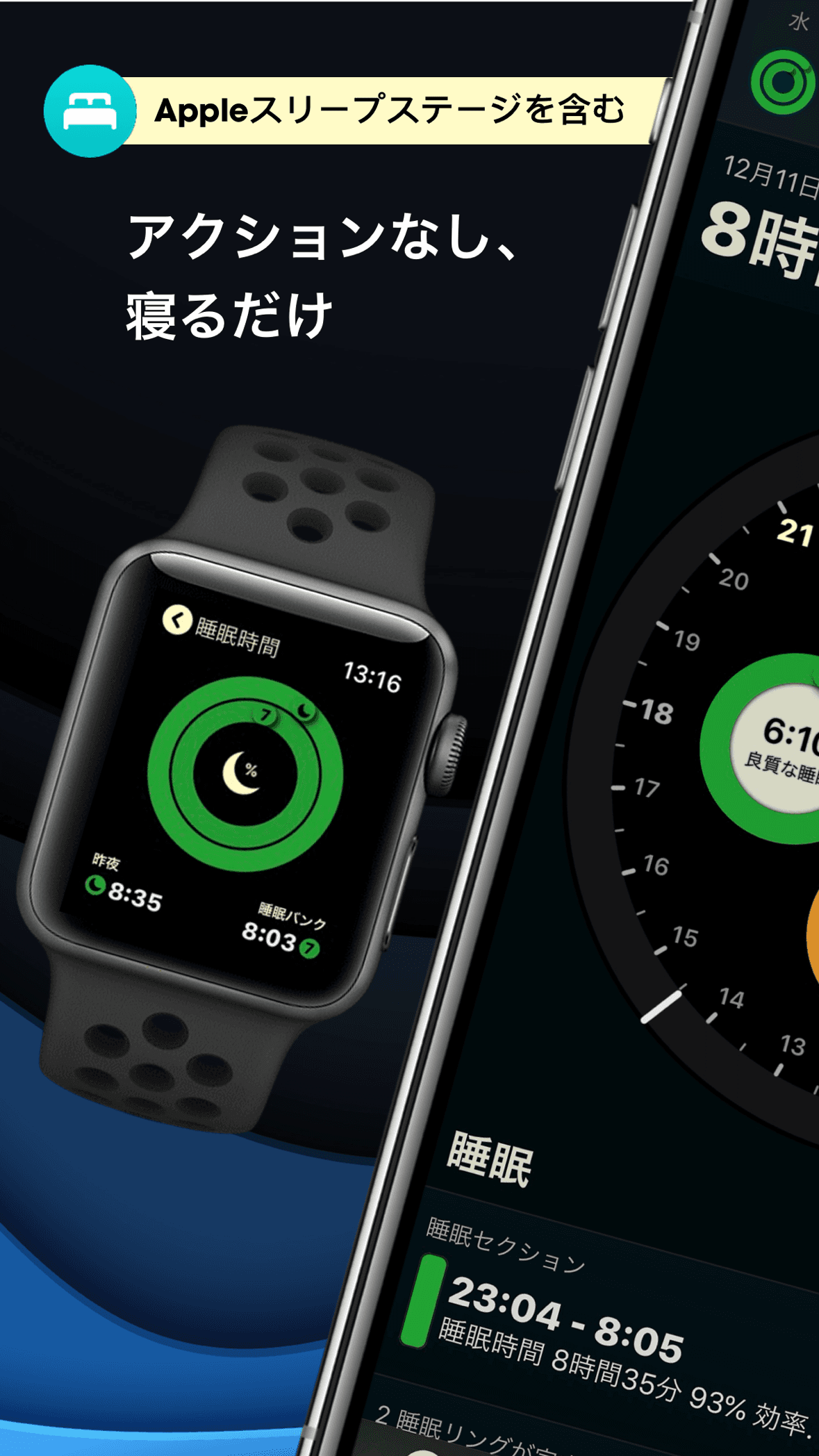
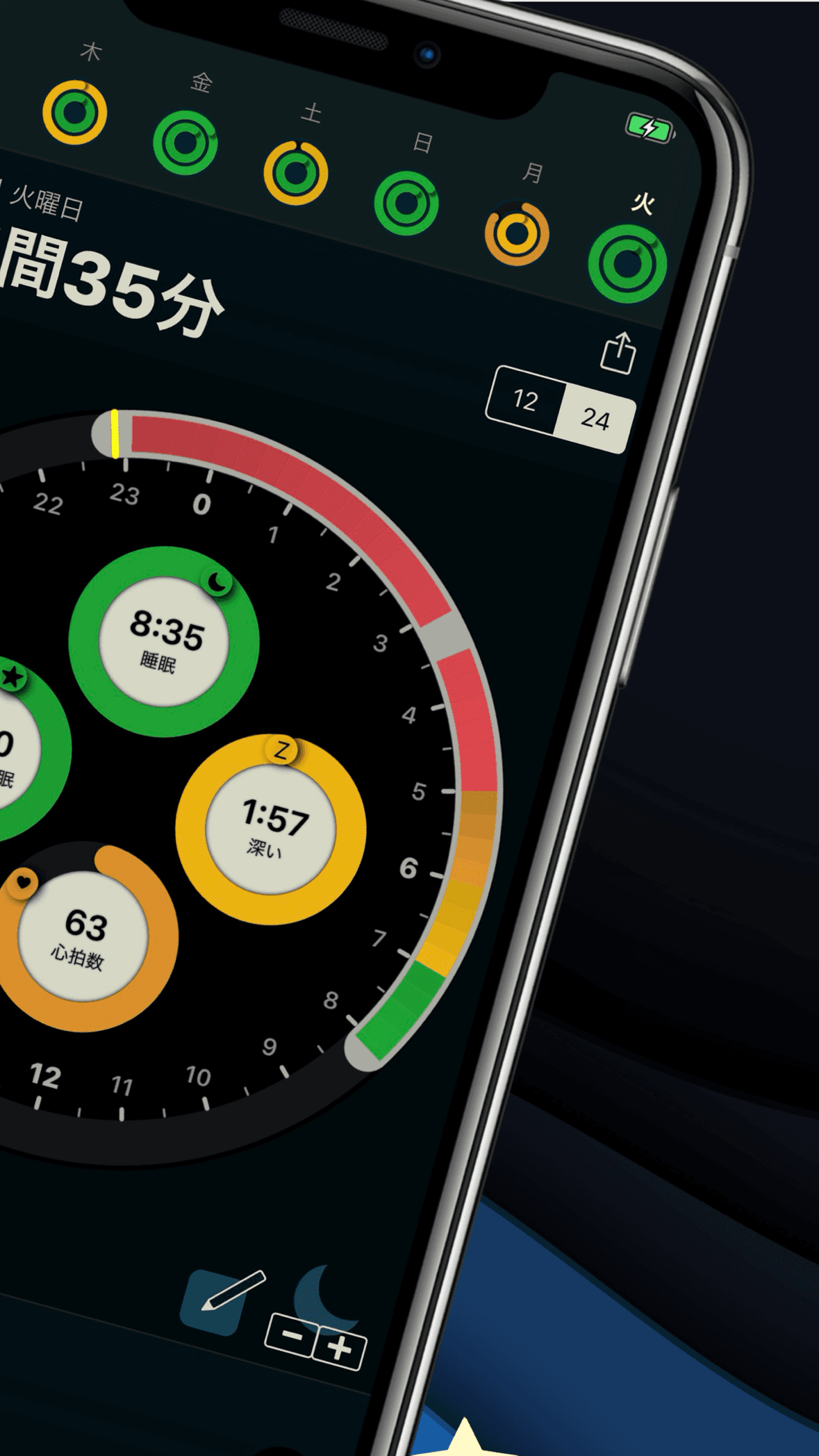
The main opportunity is not polish but sequencing. The first screenshot should lead with the clearest user outcome such as automatic Apple Watch sleep tracking, then progressively introduce analysis depth, readiness insights, and no-subscription value.
Recommended ASO keyword strategy
AutoSleep already benefits from strong branded and category demand, but there is still room to expand intent coverage around Apple Watch tracking, sleep analysis, snoring, readiness, and recovery language.
- Core intent keywords: sleep tracker, sleep tracking app, Apple Watch sleep tracker, sleep monitor
- Feature-led keywords: snore tracking, sleep stages, HRV sleep, readiness app, smart alarm
- Outcome-led keywords: improve sleep, track sleep quality, monitor sleep recovery, bedtime analysis
- Audience-led keywords: Apple Watch users, health tracking app, recovery tracking app
Because this listing is in Japan, localization quality matters even more than raw keyword volume. The strongest path is not direct translation alone, but matching how Japanese users search for sleep tracking, Apple Watch health metrics, and recovery data in natural language.
Competitor analysis: where AutoSleep stands apart
AutoSleep competes with both dedicated sleep apps and broader health tracking tools. Its best defense is that it combines automation, Apple ecosystem fit, and premium ownership economics better than many rivals.
- Sleep Cycle is strong on broad sleep awareness and smart alarms, but it leans more heavily on subscription behavior
- Pillow offers a polished Apple ecosystem experience and overlaps closely on sleep stages and Apple Watch use cases
- Athlytic competes more on recovery and readiness, especially for users who care about HRV and performance
- HeartWatch is adjacent rather than direct, but matters because AutoSleep users often live inside broader health metric workflows
AutoSleep should continue positioning itself as the sleep-first, Apple Watch-native choice for users who want deep data without ongoing subscription fatigue. That message is simpler and often more persuasive than a generic wellness app story.
The biggest growth and conversion opportunities
The product is already trusted, so future ASO gains will likely come from clearer message hierarchy rather than dramatic repositioning.
- Lead more aggressively with Apple Watch automation in the first screenshot and supporting metadata
- Highlight the one-time purchase model earlier because it is a major conversion differentiator
- Use review language to surface credibility themes such as accurate, effortless, detailed, and worth the price
- Create web comparison pages targeting searches like AutoSleep vs Pillow and best sleep tracker for Apple Watch
- Publish educational content around metrics such as HRV during sleep, readiness, snoring, and sleep debt
- Turn recent update notes into landing page content to show that the product is still evolving
What gives AutoSleep a durable advantage
A lot of health apps compete on novelty. AutoSleep competes on credibility and habit fit, which is usually much harder to displace.
- High review volume with strong average rating creates strong trust before install
- A one-time purchase is easier to defend in marketing than another sleep subscription
- Apple Watch-native positioning matches a clear audience with strong purchase intent
- The app covers both passive tracking and advanced analysis, which broadens its market
- Long-term App Store presence lowers perceived product risk
One notable recent strength is the update direction itself. The November 29, 2025 release added new themes, expanded stress and HRV views, and integrated the companion AutoSnore experience more tightly. That gives the team fresh messaging angles without changing the core positioning.
Final ASO takeaway
AutoSleep already owns a valuable position: premium Apple Watch sleep tracking with depth, trust, and no subscription burden. The next growth unlock is not changing what the app is. It is making the current advantages more obvious, faster, and more searchable.
For your SEO strategy, this is another excellent template article because it combines clear category intent, visible competitors, and strong product differentiation. It fits perfectly into a scalable content system for high-authority App Store analysis posts.
Continue your ASO workflow