AnkiMobile ASO Analysis: How a Paid Study App Competes
Analyze how AnkiMobile uses official ecosystem trust, spaced repetition, advanced flashcard features, and one-time pricing to compete in the App Store.
In this article
- 01AnkiMobile competes as infrastructure, not a casual study app
- 02AnkiMobile App Store snapshot
- 03The title protects official brand intent
- 04Public keyword coverage favors specialist study workflows
- 05The listing explains the price before selling the experience
- 06The screenshots prove depth but look like documentation
- 07Visible reviews defend value and expose reliability risk
- 08The companion-product limitation should remain visible
- 09Growth opportunities
- 10What paid app teams can learn from AnkiMobile
- 11FAQ
AnkiMobile competes as infrastructure, not a casual study app
Many flashcard apps use a free download, polished onboarding, shared content, and recurring subscriptions. AnkiMobile follows a different model. It is a paid mobile companion to the established Anki desktop, web, and synchronization ecosystem, with advanced scheduling and customization aimed at committed learners.
That creates unusual ASO strengths—brand trust, official ecosystem compatibility, specialist depth, and subscription-free ownership—and equally unusual conversion friction. This analysis uses the public US App Store listing captured on June 28, 2026.
AnkiMobile App Store snapshot

AnkiMobile Flashcards
Smart & powerful flashcards
- Category position
- #1 Education
- Rating snapshot
- 4.0 from 2.3K ratings
- Price
- $24.99 one-time purchase
- Developer
- Anki Software, LLC
The title protects official brand intent
AnkiMobile Flashcards combines the recognized Anki brand with the product category. The subtitle Smart & powerful flashcards emphasizes depth rather than ease, social learning, or prebuilt content.
The public description explicitly distinguishes AnkiMobile from other apps using Anki in their names and explains that this is the companion built by the lead developer of Anki and AnkiWeb. That official compatibility is both a brand-defense message and a conversion advantage for existing desktop users.
Public keyword coverage favors specialist study workflows
| Cluster | Public language | User value |
|---|---|---|
| Core category | flashcards, card decks, study | Create and review learning material |
| Learning method | spaced repetition, FSRS, SM2, scheduling | Review material near the point of forgetting |
| Ecosystem | sync, desktop, web, multi-platform, open-source | Continue one study system across devices |
| Advanced cards | images, audio, cloze, MathJax, LaTeX | Support technical and media-rich learning |
| Control | offline, large decks, search, gestures, statistics | Flexible workflows for committed users |
The hidden keyword field is not public. AnkiMobile should prioritize terms that reinforce official compatibility and learning depth rather than trying to imitate every generic homework or AI study phrase.
The listing explains the price before selling the experience
At $24.99, AnkiMobile creates more purchase friction than a free flashcard download. The description addresses this directly: mobile sales support development of both desktop and mobile Anki, and the app is priced more like computer software than a lightweight companion.
This explanation is credible for users who understand the ecosystem, but cold traffic still needs a simple value comparison. The durable paid story is one purchase, no recurring subscription, official sync, advanced scheduling, offline study, and long-term control over a personal knowledge system.
The screenshots prove depth but look like documentation
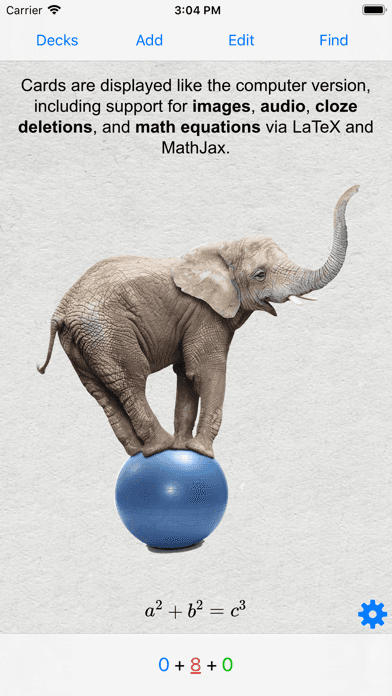
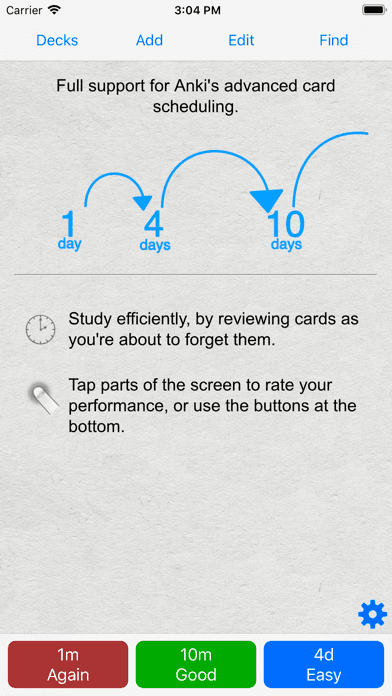
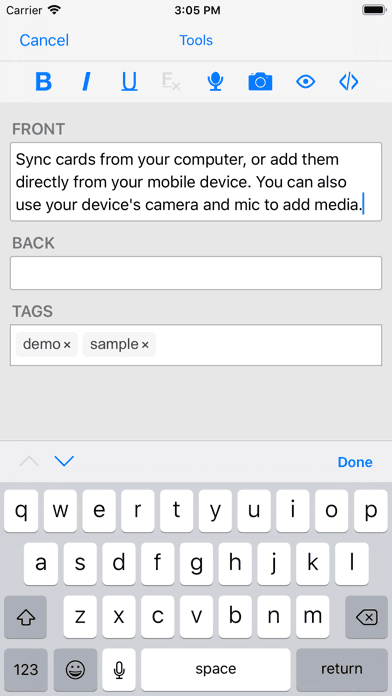
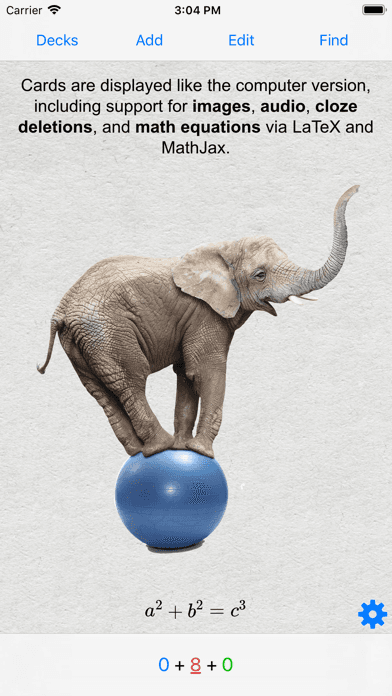
The first frames explain feature support, advanced scheduling, and mobile card creation with dense instructional text. They are accurate and useful to expert buyers, but the sequence resembles product documentation more than modern conversion creative.
The screenshots also use a dated visual language that visible reviews acknowledge. This can signal seriousness to loyal Anki users, yet it increases the work required from a new student who does not already understand spaced repetition, cloze deletion, or LaTeX.
Alternative first-three sequence
- Remember More With Smarter Review Timing
- Keep Every Deck in Sync
- One Purchase. No Monthly Subscription.
Visible reviews defend value and expose reliability risk
Positive visible reviews emphasize the original creator, official compatibility, active recall, spaced repetition, advanced features, device sync, no ads, no monthly payment, and long-term usefulness. That is unusually strong positioning language for a paid utility.
Critical themes include bugs, synchronization risk, data loss, difficult onboarding, an outdated interface, and failures during high-stakes study periods. For a tool used before exams, reliability is not a secondary quality signal; it is part of the conversion promise.
Use the review-led conversion workflow to separate recurring current-version issues from older anecdotes.
The companion-product limitation should remain visible
The description clearly states that AnkiMobile is intended as a companion to desktop Anki rather than a complete replacement. Some note-type changes and add-on workflows still require the computer version. This disclosure may reduce raw conversion, but it improves expectation quality and protects ratings from mismatched purchases.
Growth opportunities
- Translate algorithms into outcomes. Explain FSRS and scheduling through better memory and efficient review.
- Make one-time value visible. Compare ownership and ecosystem support with recurring subscription fatigue.
- Modernize creative without hiding complexity. Use benefit-led frames, then preserve advanced proof later.
- Lead with official compatibility. Reduce confusion with similarly named apps.
- Address reliability as trust. Surface backup, sync, and recovery confidence where evidence supports it.
What paid app teams can learn from AnkiMobile
- A paid app needs a value model, not only a feature list
- Official ecosystem compatibility can be a major acquisition moat
- Specialist depth can justify visual complexity, but not unclear outcomes
- Transparent limitations improve conversion quality
- Reliability carries more weight in high-stakes workflows
Compare this specialist, paid model with the broader freemium positioning in our Goodnotes vs Notability analysis, or see how two lower-priced paid productivity apps differentiate themselves in our Streaks vs Things 3 comparison.
FAQ
Why is AnkiMobile paid when desktop Anki is free?
The public listing says mobile sales support development of the broader Anki ecosystem and that the iOS app is priced as computer software.
What is AnkiMobile's strongest ASO advantage?
Official compatibility with Anki desktop and AnkiWeb, combined with advanced scheduling and one-time ownership, creates a defensible specialist position.
What is the biggest screenshot weakness?
The current screenshots explain technical features accurately but require substantial reading and prior knowledge before the benefit is clear.
How often should this analysis be updated?
Recheck the listing when price, scheduling technology, desktop compatibility, opening screenshots, or major sync behavior changes.
Continue your ASO workflow