Paprika Recipe Manager ASO Analysis: Premium Utility Growth
Analyze Paprika Recipe Manager's paid App Store positioning, recipe keywords, screenshots, reviews, cross-device model, and growth opportunities.
In this article
- 01Why a paid recipe utility still competes
- 02US App Store snapshot
- 03The title captures brand and category efficiently
- 04Screenshots prove the workflow but show their age
- 05Paprika owns a workflow, not a content feed
- 06Cross-device value needs transparent purchase messaging
- 07Reviews reveal retention strength and modernization risk
- 08Growth opportunities
- 09Lessons for premium utility apps
- 10FAQ
Why a paid recipe utility still competes
Paprika Recipe Manager 3 does not compete primarily by publishing more recipes. It helps users own and operate a personal cooking system: capture recipes from websites, organize them, build grocery lists, plan meals, cook from a readable view, and sync the library.
That position is defensible against free content apps because value compounds with every saved recipe and completed plan. The ASO challenge is making the workflow visible without turning the listing into a long feature inventory.
US App Store snapshot
As checked June 28, 2026, the iPhone and iPad app is titled Paprika Recipe Manager 3 with the subtitle Organize your recipes. It is $4.99, shows a 4.9 rating from about 53K ratings, and appears at #1 in Food & Drink.
Discovery
Recipe manager, recipe organizer, save recipes, recipe keeper
Planning
Meal planner, weekly menu, grocery list, pantry inventory
Cooking
Serving size, measurement converter, cooking timer, offline recipes
The exact hidden keyword field is not public. These clusters come from visible metadata and described jobs and should be validated as candidates, not reported as Paprika rankings.
The title captures brand and category efficiently
“Paprika” is memorable but does not explain the product on its own. “Recipe Manager” supplies the category in the title, while “Organize your recipes” turns that category into a plain-language outcome. The numeral 3 preserves version recognition but uses space that a new app might reserve for an additional discovery term.
The description opens with five short jobs: organize recipes, create grocery lists, plan meals, download recipes, and sync devices. It outlines the complete use cycle before explaining individual tools.
Screenshots prove the workflow but show their age
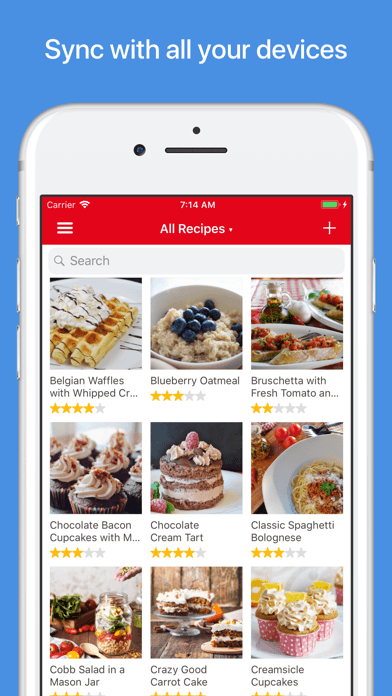
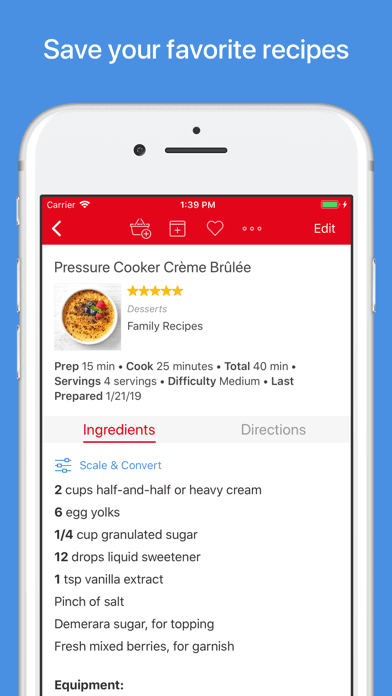
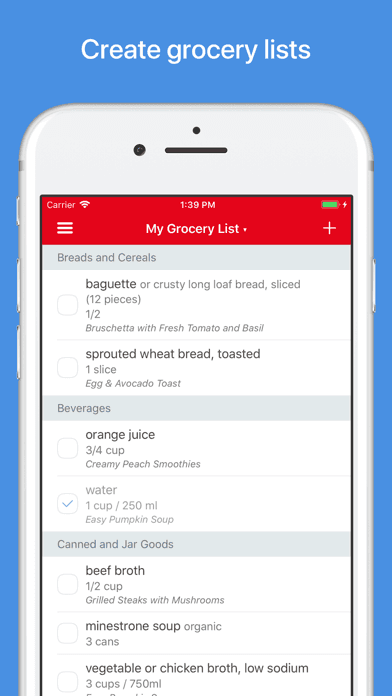
“Sync with all your devices,” “Save your favorite recipes,” and “Create grocery lists” are concrete, readable promises. The sequence communicates utility without exaggeration and moves from library to recipe to shopping.
The visual treatment, device frame, typography, and interface crop are older than many current Food & Drink listings. That can signal stability, but it may also create doubt about active development. A refresh should preserve the direct copy while demonstrating current iPhone, iPad, widgets, meal planning, and cooking views.
Paprika owns a workflow, not a content feed
| Stage | User job | Listing proof |
|---|---|---|
| Capture | Save recipes from websites or add your own | Download, browser extension, import |
| Organize | Build a searchable personal library | Categories, subcategories, ingredient search |
| Plan | Turn recipes into meals and shopping | Calendars, menus, pantry, grocery lists |
| Cook | Follow and adjust a recipe in the kitchen | Timers, scaling, conversion, screen-on mode |
| Retain | Keep the library available over time | Local storage, offline access, device sync, export |
Cross-device value needs transparent purchase messaging
Paprika is sold separately by platform. The current US listings show $4.99 for iPhone/iPad and $29.99 for Mac. Sync connects the products, but sync does not mean one purchase unlocks every platform. That distinction should be visible before a user builds a recipe library.
Separate purchases can still support a strong value proposition: ownership, offline access, and a specialized workflow without a recurring consumer subscription. Compare that model with the paid productivity products in our Streaks vs Things 3 analysis.
Reviews reveal retention strength and modernization risk
Visible review language praises long-term use, offline availability, recipe downloading, organization, meal planning, grocery lists, and buy-once value. Those themes explain why a utility can remain useful for years rather than only during an initial cooking phase.
Requests around notes, cooking history, measurement conversion, interface age, importing, or sync should be separated by frequency and severity. Use the review intelligence guide to convert repeated language into evidence-backed priorities.
Growth opportunities
- Modernize the opening creative. Show current devices and preserve the clear job-led headlines.
- Demonstrate recipe capture. The website-to-library moment is a high-value differentiator.
- Show the full planning loop. Connect recipe, meal calendar, pantry, and grocery list in sequence.
- Clarify platform purchases. Explain what sync does and which versions are sold separately.
- Make ownership and offline access visible. These are meaningful alternatives to subscription content apps.
- Refresh metadata when the product changes. Follow the metadata refresh framework instead of changing stable terms without evidence.
Lessons for premium utility apps
- A complete workflow is more defensible than a single feature
- Long-term user data raises the importance of export, sync, and ownership trust
- Straightforward screenshot copy can outperform vague creative
- Separate platform purchases require explicit expectation setting
- Visual modernization should not erase product familiarity
Darkroom faces a related premium challenge in a faster-moving creative market; see our Darkroom ASO analysis.
FAQ
What is Paprika Recipe Manager's strongest ASO position?
It combines recipe organization, meal planning, grocery lists, cooking utilities, offline access, and sync in one owned workflow.
Is Paprika a subscription?
The current iPhone/iPad listing uses an upfront price. Versions for other platforms are sold separately.
What should Paprika improve first in its listing?
Refresh the screenshots with current devices and interface proof while keeping the direct, job-based copy.
Which keyword clusters fit a recipe manager?
Recipe organizer, save recipes, meal planner, grocery list, pantry, serving conversion, cooking timer, and offline recipe terms fit different stages of the workflow.
Continue your ASO workflow